
How to Organize Gear in a Fishing Bag?
A successful day on the water often depends on how prepared you are when that big fish strikes. However, if you are constantly digging through a jumbled mess of lures and tools, you will miss your opportunity. Learning how to properly organize gear in your fishing bags are essential for every angler. Whether you use a simple sling or a large multi-compartment system, an organized fishing backpack or tackle bag allows you to focus on fishing instead of fumbling.
The first step to organization is sorting your gear by category and frequency of use. Your fishing tackle bag should be arranged so that the items you reach for most often are the easiest to access. For example, pliers, line cutters, and sunscreen should live in external pockets or the top compartment of your fishing bags. Lures and hooks you use frequently should be in the top trays of your tackle bag, while backup gear and seasonal items can sit at the bottom.
Utilizing modular storage systems is the secret weapon of professional organization. Hard plastic utility boxes are the best investment for any fishing backpack. These boxes allow you to separate hooks, weights, and soft plastics by size and type. When selecting boxes for your fishing tackle bag, measure the internal dimensions first. Standard 3600 or 3700 size trays fit most fishing bags perfectly. For those who use a fly fishing backpack, small fleece-lined boxes or slotted foam books are ideal for keeping delicate flies safe and untangled.
For anglers who use a fly fishing backpack, organization requires a slightly different approach. Fly fishing demands rapid access to tiny items. In your fly fishing backpack, dedicate one small pouch exclusively for tippet spools and another for strike indicators and putty. Flies should be organized by type—dry flies, nymphs, and streamers—each in their own box. Many fly anglers also use zippered mesh pockets inside their fishing backpack to store wet gear or a spare leader, keeping it separate from dry essentials.
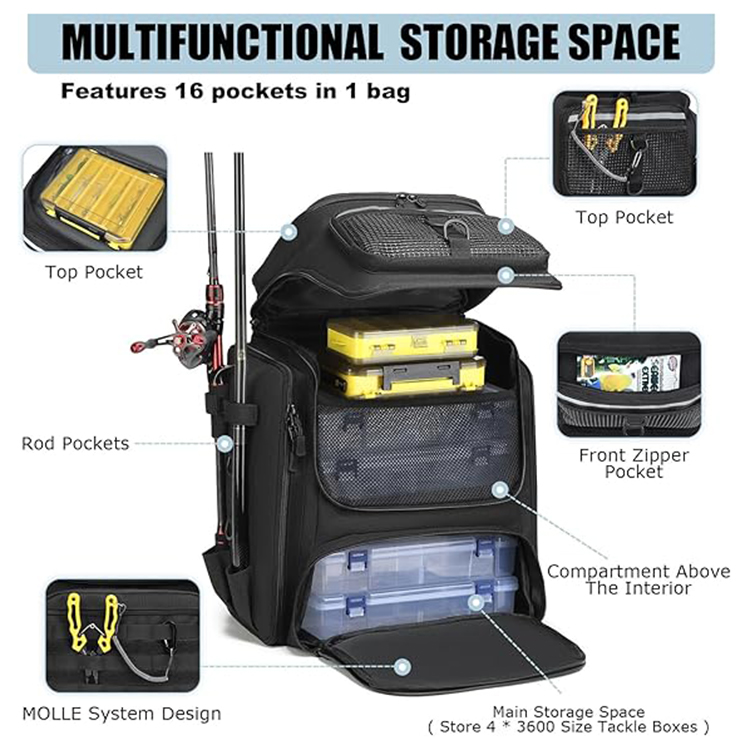
fishing bags
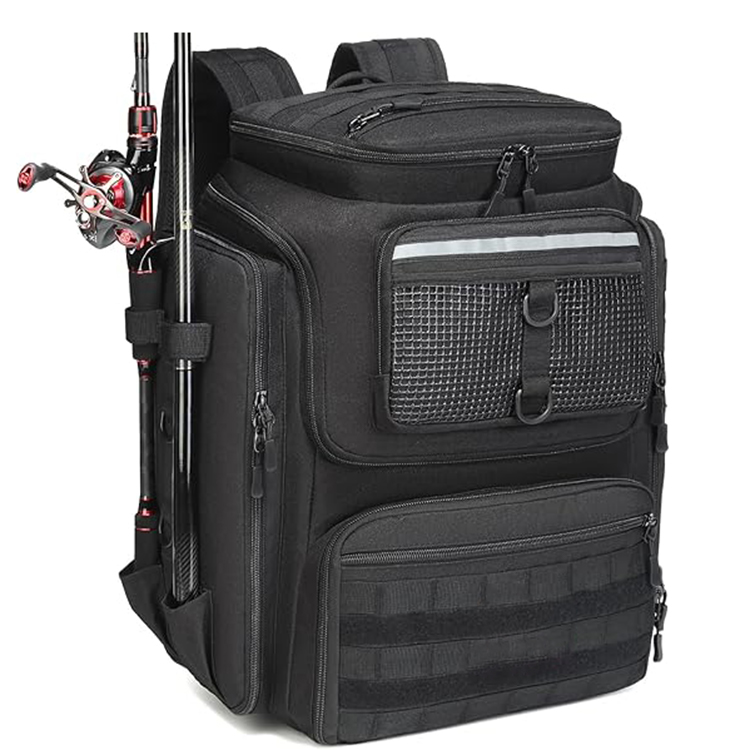
tackle bag

fly fishing backpack
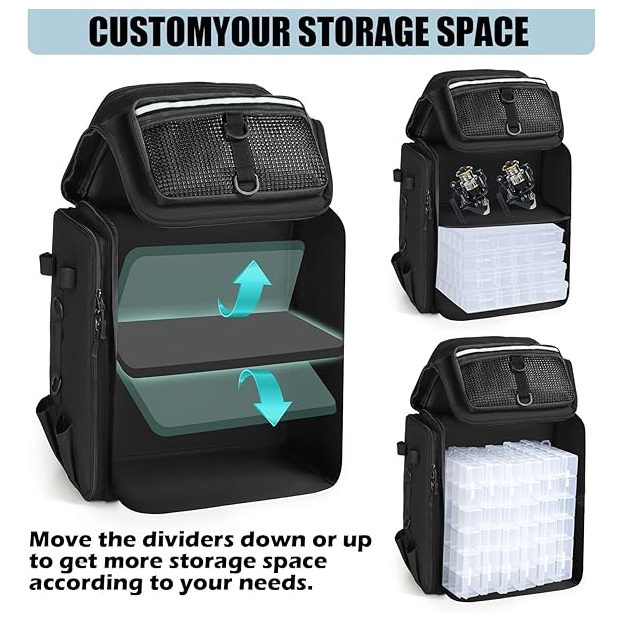
fishing tackle bag
Ziplock bags and small pouches are inexpensive but invaluable tools for organizing any tackle bag. Use them to group small items like barrel swivels, snaps, and beads. This prevents them from spilling all over the bottom of your fishing bags. Additionally, consider using a small, waterproof dry bag inside your fishing backpack to store your phone, keys, and wallet. This protects your valuables even if your main fishing tackle bag gets splashed by a wave or caught in the rain.
Labeling and regular maintenance will keep your system working long-term. Take everything out of your fishing bags at the end of each season. Clean out old line, rusty hooks, and empty packaging. As you reload your tackle bag, think about the places you fish most often. If you fish rocky bottoms, keep snag-resistant jigs accessible. If you fish weedy lakes, keep topwater lures in the front of your fishing backpack. This tailored approach ensures your gear works for you.
Finally, consider weight distribution, especially in a fishing backpack. Heavier items like large reel cases or multiple water bottles should be placed closest to your back, centered between your shoulders. This prevents the fishing backpack from pulling you backward and causing fatigue. In a traditional tackle bag, keep heavy boxes on the bottom to lower the center of gravity, making the bag more stable when carried.
An organized fishing tackle bag saves time and reduces stress. By using modular boxes, sorting by frequency, and maintaining your gear, you transform your fishing bags from simple containers into efficient fishing machines. Whether you carry a lightweight fly fishing backpack or a heavy-duty tackle bag, a place for everything and everything in its place will lead to more fish and fewer headaches.
YOUKBAG is professinal bag manufacturer with a reputation for top quality products since 2003. More than 10,000 square meters area for sewing bags and welding waterproof bags, 200 experienced workers, produce 200,000pcs bags per month. OEM and ODM both are welcomed, our professional R&D team and technical QC inspection from raw materials to finished products to guarantee quality.