
How to Pack a Fishing Bag for a Day Trip?
A day trip on the water is one of life's greatest pleasures, but arriving unprepared can quickly turn excitement into frustration. Knowing how to pack your fishing bags efficiently ensures you have everything you need without being weighed down by unnecessary gear. Whether you prefer a sling-style carrier or a full fishing backpack, smart packing strategies will keep you mobile, organized, and ready for action from sunrise to sunset.
The golden rule of packing any tackle bag for a day trip is to prioritize versatility while minimizing bulk. You do not need your entire winter collection of lures for a single summer afternoon. Begin by researching the water you will fish. Will you be on a rocky shoreline, a weedy lake, or a flowing river? The conditions dictate exactly what belongs in your fishing bags. Once you know the target species and structure, you can select only the most effective lures and tools, leaving the heavy extras at home.
Start your pack with the foundation: storage boxes. For a well-organized fishing tackle bag, choose one or two utility boxes that fit the lure types you need most. If you are using a standard fishing backpack, ensure these boxes slide in and out easily. Pack one box with your topwater lures and crankbaits, and another with soft plastics and jig heads. This separation prevents tangles and allows you to swap boxes quickly if conditions change. For anglers carrying a fly fishing backpack, use small slotted foam books to keep dry flies and nymphs separate and easily accessible.
The next layer involves your tools and accessories. Items like pliers, line clippers, and hook removers should never be buried at the bottom of your tackle bag. These essentials belong in the exterior pockets or the top compartment of your fishing bags. If your fishing backpack has a padded sunglass pocket, use it religiously. Sunscreen, insect repellent, and hand sanitizer should also live in quick-grab zones. A small waterproof container inside your fishing tackle bag is perfect for storing car keys and a phone, protecting them from accidental splashes.

fishing bags
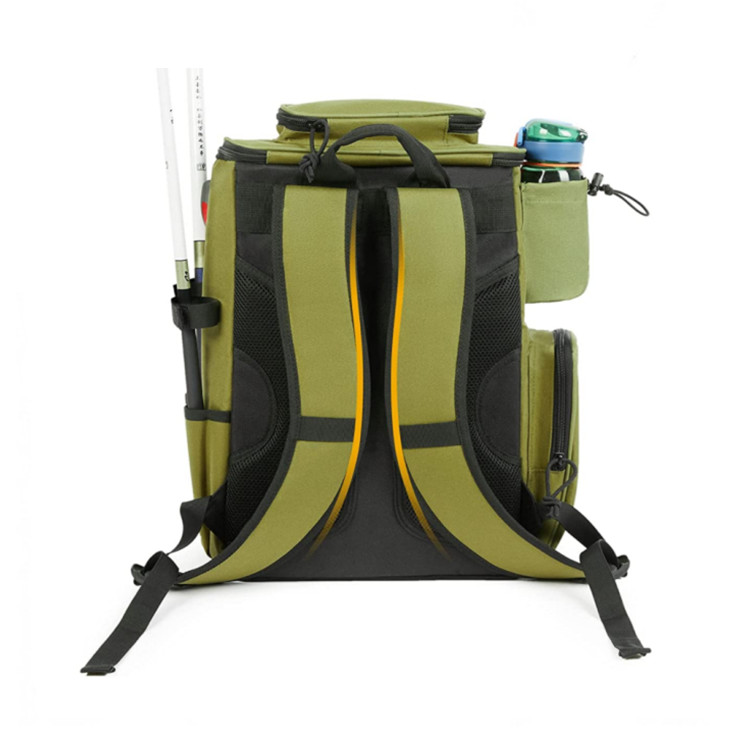
tackle bag
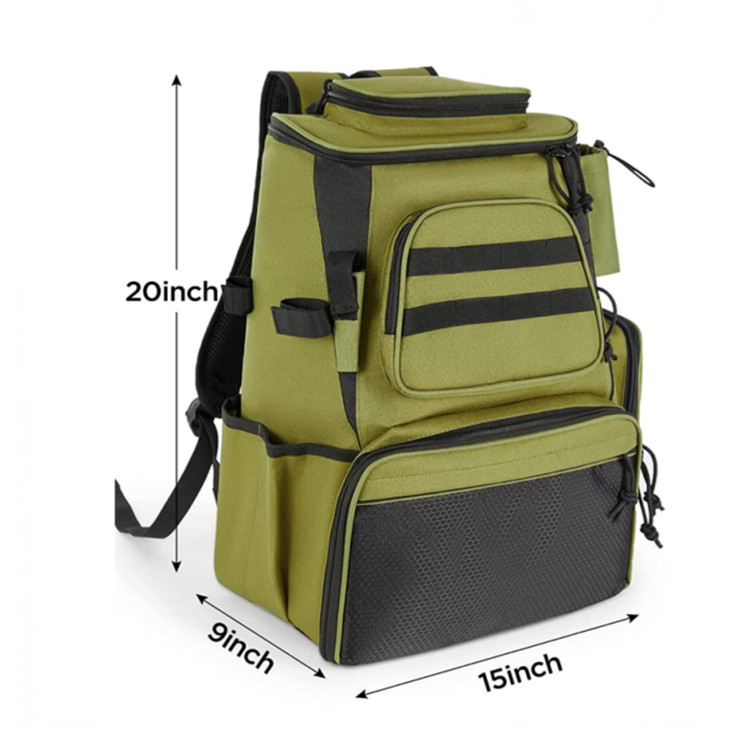
fishing tackle bag

fly fishing backpack
For anglers using a fly fishing backpack, packing requires attention to sequence. Start with your fly boxes in the most accessible slot, usually a dedicated fleece-lined compartment. Next, add your tippet spools and leaders, ideally in a small zippered pouch to prevent them from rolling around. Your fly fishing backpack should also carry a water bottle or hydration reservoir, as river wading is physically demanding. Finally, tuck a spare leader and a small patch kit for waders into the bottom of your fishing bags for emergencies.
Comfort and safety items are non-negotiable in any day trip loadout. Even if you carry a lightweight fishing backpack, allocate space for a rain jacket or an insulating layer. Weather changes fast on the water. Pack a high-energy snack and at least one liter of water. These items should be placed against the back panel of your fishing backpack to balance the weight. In a traditional tackle bag, distribute heavier water bottles on one side and heavier lure boxes on the other to maintain equilibrium while carrying.
Do not forget a small first-aid kit. Many anglers overlook this, but a few bandages and antiseptic wipes can save a day trip if you hook a finger or slip on a rock. Stash this kit in a side pocket of your fishing tackle bag where it is easy to find. Also, include a small microfiber towel clipped to the outside of your fishing bags for drying hands before handling cameras or tying knots.
Finally, test the weight before you leave the house. Lift your fully packed fishing backpack or tackle bag. If it feels too heavy, reconsider each item. Ask yourself if you truly need five different colors of the same worm. By trimming the fat, your fishing bags become lighter, and your day becomes more enjoyable.
Packing for a day trip is about strategic selection. By choosing the right lures, prioritizing access to tools, and including safety essentials, your fishing tackle bag becomes a streamlined command center. Whether you carry a compact fly fishing backpack or a roomy fishing backpack, a well-packed bag means more time with your line in the water and less time digging through gear.